By Jon Quick, CEO, Launchpad Build AI
“Three billion human lives ended on August 29. The survivors of the nuclear fire called the war Judgment Day” S. Connor
According to James Cameron’s Terminator 2, this Saturday, 29 August, is Judgment Day. That movie showed an AI (Skynet) becoming self-aware and putting humanity on the brink of extinction.
This is a theme that you see repeated in the Matrix, Battlestar Galactica and pretty much any other science fiction text tied to AI. It’s also what people are worried about with the current iterations of AI: are we going to be the harbingers of our own doom?
As the CEO of an AI company, I’m happy to report that this isn’t the direction we’re going in.
To explain why, let’s start by looking at what a robot actually is.
What do you think of when you hear the word “robot”?
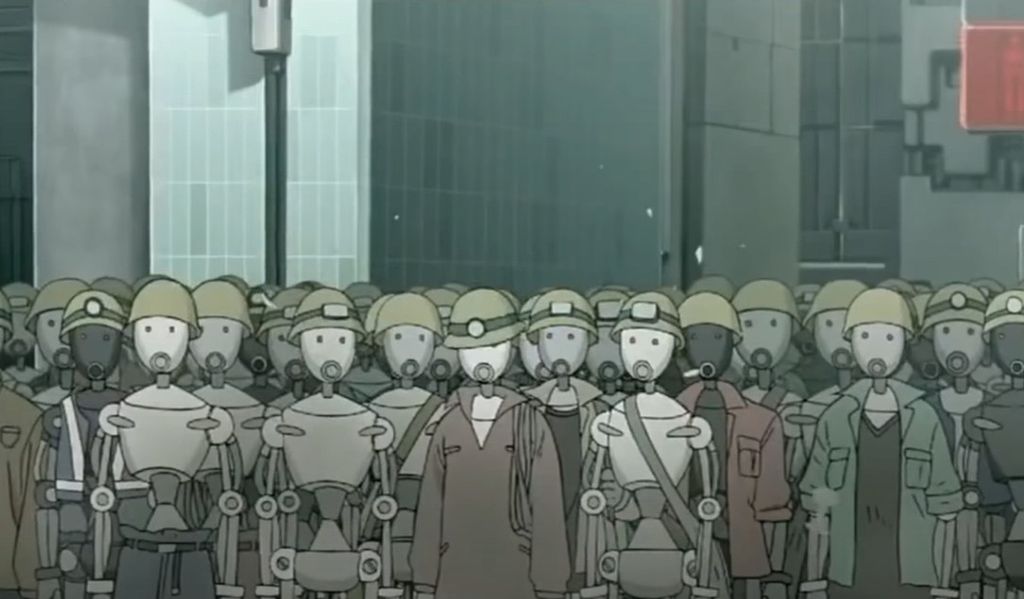
Funnily enough, it’s probably age dependent, and can be anything from Rosie in the Jetsons to Johnny 5, the Iron Giant or C3PO. The ironic thing is that 95% of the time whatever robot you have in your head is humanoid. The other 5% it’s R2D2.
As depicted in the Sistine Chapel, man is created in God’s image, so it’s easy to see how our concept of a robot has consistently been created in man’s own image. It’s simply what we know.
The question then becomes why…

Looking at the most successful robot deployments to date, they are decidedly not human.
We have Tesla and Waymo cars, whose designers decided would be better modelled on KITT from Knight Rider than Johnny Cab from Total Recall. In both vehicles the companies realised that, rather than create a robot taxi driver, it would be best simply to have a driving wheel.
The other major success story is the Roomba robot vacuum. Rather than a humanoid pushing a vacuum, the designers went with an elongated hockey puck, 4-5 inches tall.
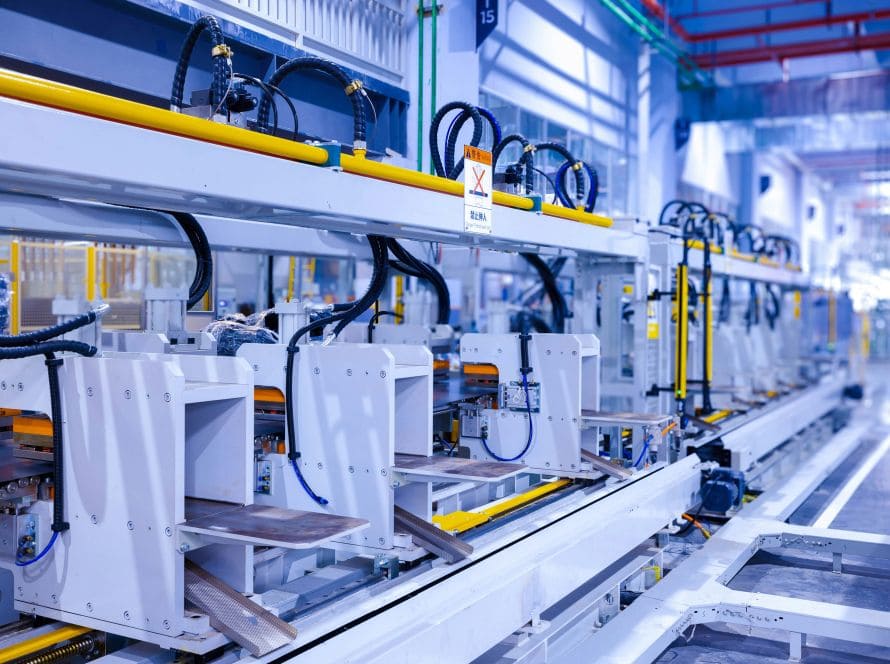
Looking ahead, we’re starting to see variations on that theme. There are a number of window cleaning robot demos and concepts that are a lot more spider than spiderman. You have Eric Schmidt backing a wheel-based robotic design by Genesis AI called Eno. You also have Launchpad Build AI, and we’re firmly in the camp of unhuman-style robots for manufacturing and assembly.
Why not humanoid? Well, take an action like screwing something in. It takes a number of steps:
1) Thread screw
2) Line up screw with hole
3) Pilot hole, with no cross threading
4) Torque to flat, without stripping the screw and without over or under-torquing
5) Inspection
When a human or humanoid does it there are a number of failure points. Take threading the screw. We have a client where the highest variability in their human cycle time is caused by dropped screws. Threading can take 2-25 seconds. Replace that with a blow-fed screw and top down screwdriver and it is now a 2-3 second operation, guaranteed.
Torquing is easier too. Screwdrivers can have torque sensing, but they still require stability. That doesn’t exist with humans or humanoids. By contrast, a fixed-position, non-humanoid robot has that today. All of this is a big deal: the difference between a demo and earning your way onto the factory floor is repeatability.
Say you drive a screw correctly 95% of the time. That sounds like a machine that works. But put 20 screws in one product and your first pass yield is 0.95 to the 20th, which is 36%. Two out of three units come off the line defective. For a company that’s game over.
Given that, would you rather trust a machine that has been designed and built especially for the purpose? No wasted movements, no extraneous appendages. Or do you want the humanoid with two legs and all kinds of joints between its feet and fingers, and that is looking to figure out screwing along with one hundred thousand other skills?
In fairness the humanoid is more aesthetic. It also fits in with our utopian ideals. We don’t want messy, and our dreams are definitely better served by a single machine that can solve any problem and do anything.
The issue with aiming for perfection is that the work along the way is asymmetrical. All of the world’s most expensive consultants will espouse the 80/20 Rule: the majority of the value coming from a small percentage of the work.
Manufacturing is different – here it’s a 90/10 rule. You’ll get 90% done and then need to spend 90% of the total time on the last 10%.
This is because things are messy. Tolerances are tight, variances and expectations hard to manage. When you want to be able to handle everything, there is an almost infinite number of possibilities you have to account for. It’s why, going back to the Terminator, you need to be part man, part machine.
At Launchpad Build AI, we’re working with a customer on a project that involves stacking a number of components. Even though our error rate is very low, we still had an internal debate about recovery: if a step goes wrong, what happens?
Initially, our engineering/development team wanted to go over every failure mode and simulate both mundane and elaborate recovery sequences. In the end we took a different approach: saying that, in the rare case of an issue, a human can pop out the work-in-progress and start over. Development time -> the 30 seconds it took to communicate.
For some that was obvious, to others a surprise. Pragmatically it means the customer gets their solution 90 days earlier and at a meaningfully lower cost than if we spent three months of engineering time to solve what to do in a black swan event.
It’s a good time be building robots. Capabilities are increasing exponentially, while costs are coming down. Everyone is awake and attuned to the possibilities, looking to do something.
The next few years will decide what sort of robot fate has in store for us. At Launchpad Build AI we’re focused on the solution that is implementable immediately. I think it’s going to work.
After all, “There is no fate but what we make for ourselves.”